Care Providers
Inspiring the Next Generation of Health Leaders: Brazil’s First Program for Women in Medicine
As we celebrate International Women’s Day this week, Operation Smile reflects on the impact of training more women in health care to expand access to care and its first Women in Medicine program in Brazil.

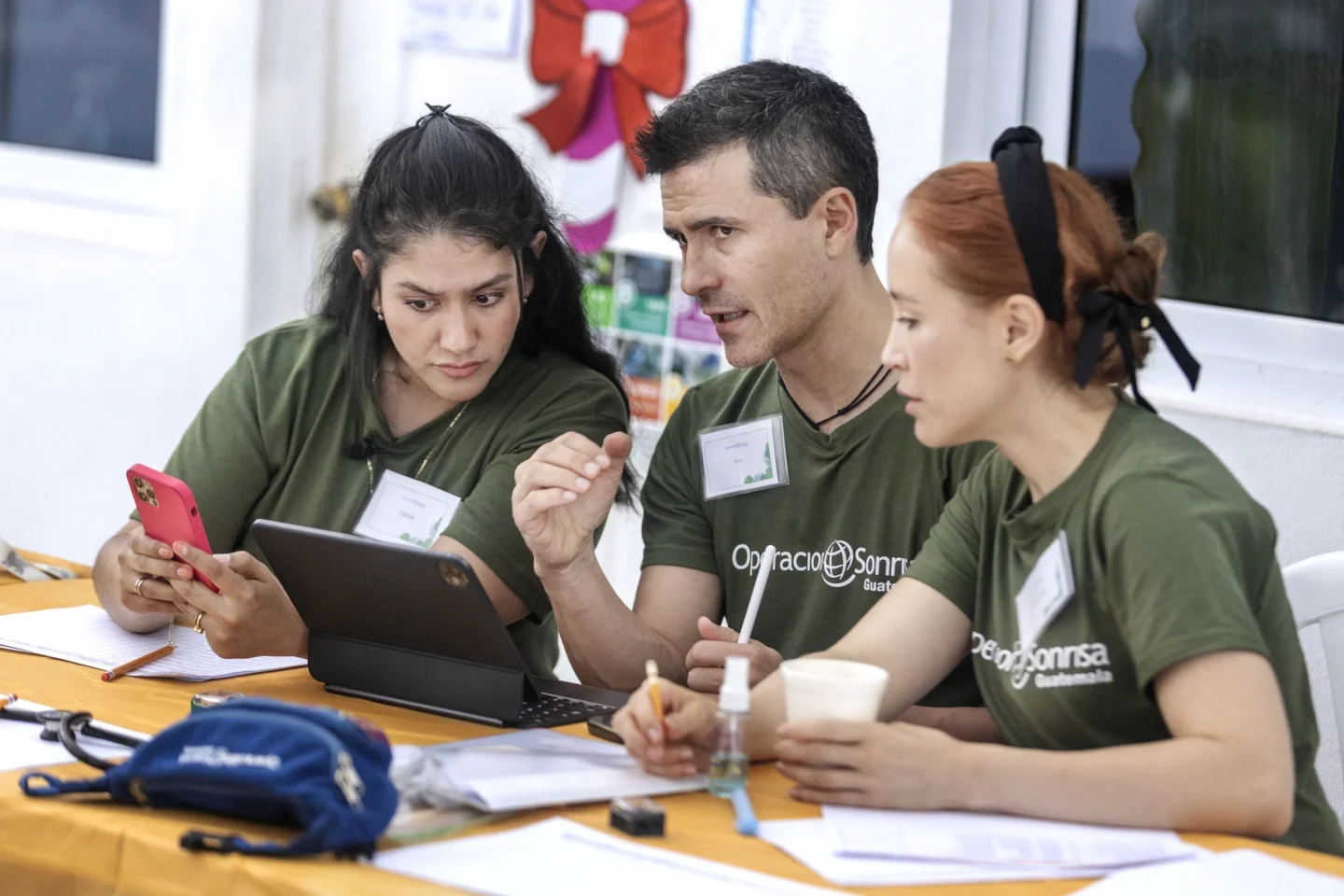
Last spring, 55 health care professionals gathered at the Hospital da Mulher Parteira Maria Correia in Mossoró, Brazil for a busy week of learning and connecting. Fifty-five women from across eight countries, including nurses, anesthesiologists, pediatricians, surgeons, medical students and more, came together for the country’s first Women in Medicine (WIM) program launched by Operation Smile. The program included volunteers and students at all skill levels who received hands-on training and mentorship. But the most valuable lesson came from seeing examples of other women in leadership positions.

As Tereza Sigaud, M.D., pediatrician and Operation Smile Volunteer explains, “I’m coming here … to set an example for other women who might want to be in a leadership position but think they couldn’t. I am here to show that yes, it is possible.”
Across the world, women make up nearly 70% of the health care workforce, yet they only hold around 25% of roles in leadership. Investing in women’s leadership is essential to building stronger, more equitable health systems and expanding access to care. Through its WIM Initiative, Operation Smile supports women by training them on advanced medical practices, expanding career opportunities in health care, and elevating cleft surgery and comprehensive care.
At the program, activities not only included lectures like one from researcher Roseli Ceide, Ph.D., clinical genetics researcher at the University of São Paulo, on the genetics of cleft conditions, but also observing surgeries and patient screenings. “Something really special happened during this program,” says Marianna Alves, program manager, Operation Smile Brazil. “One medical student told us that seeing surgeries taking place gave her hope and confidence that she can achieve her dream to one day be in the operating room as the lead surgeon.”
Even seasoned professionals, there to teach and mentor, came away feeling uplifted and inspired. “I’ve been a plastic surgeon for over 20 years, and I have always worked with men,” says Ariluce Barbosa, M.D., a plastic surgeon and Operation Smile volunteer. “Here I am amazed at how smoothly everything is flowing, how well everything is working, how good our interaction is; it’s just fantastic.”
Reflecting a broader commitment to operative training, leadership development, advocacy and research, Operation Smile’s Women in Medicine initiative is part of the strategy working to achieve our core goal: To make safe surgery accessible to everyone. By investing in women in health care, we’re bridging gaps in care, strengthening health systems and expanding access to safe, timely surgical care, ensuring more children and families receive the care they need.

But for the women who gathered at the Brazil event, the reward was not just for the patients and community, but for themselves as well.
“It’s hard work. It’s exhausting. But it is so rewarding to see that in just one hour we can transform someone’s life,” says Joana De Luca, a medical records volunteer, summing up the feelings of many in attendance. “Operation smile changed my life. From the moment I joined, I wanted to drop everything and just to do this.”
Learn more about Operation Smile’s Women in Medicine program.
More Care Providers Stories
-

-

Care Providers
5 Ways Volunteers Drive Sustainable Development and Impact
-
We Build Hope

Thought Leadership
Nine Inspiring Moments That Made Us Smile in 2025
-
We Build Hope

-
We Build Hope

-

-
We Build Hope

-

-
We Build Hope
-

-

-
Care Providers
A Partnership for Healthy Smiles